
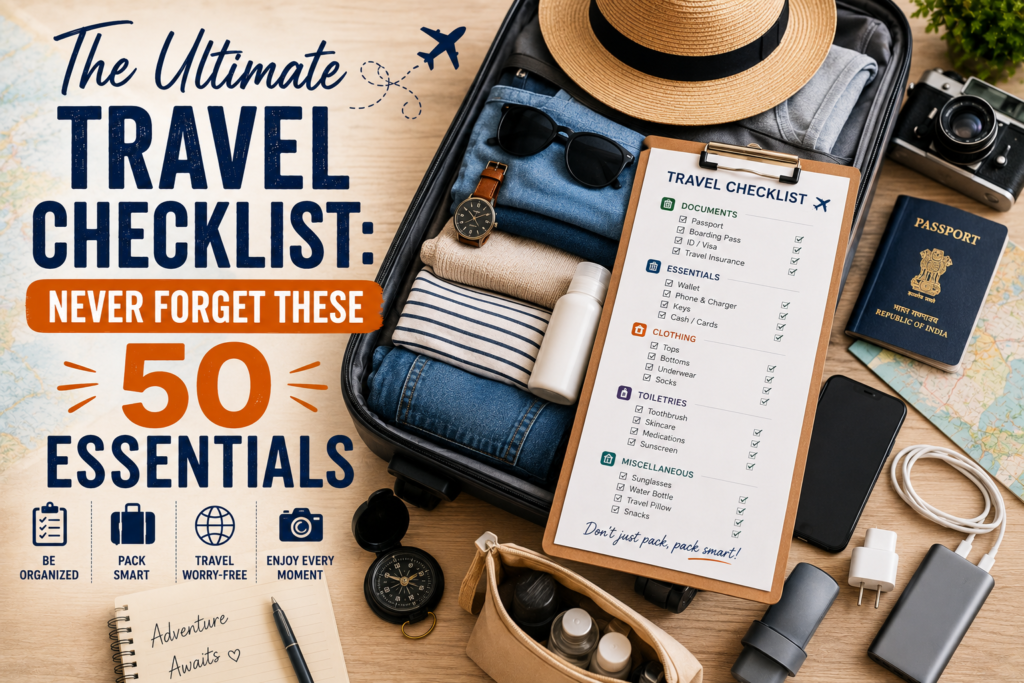
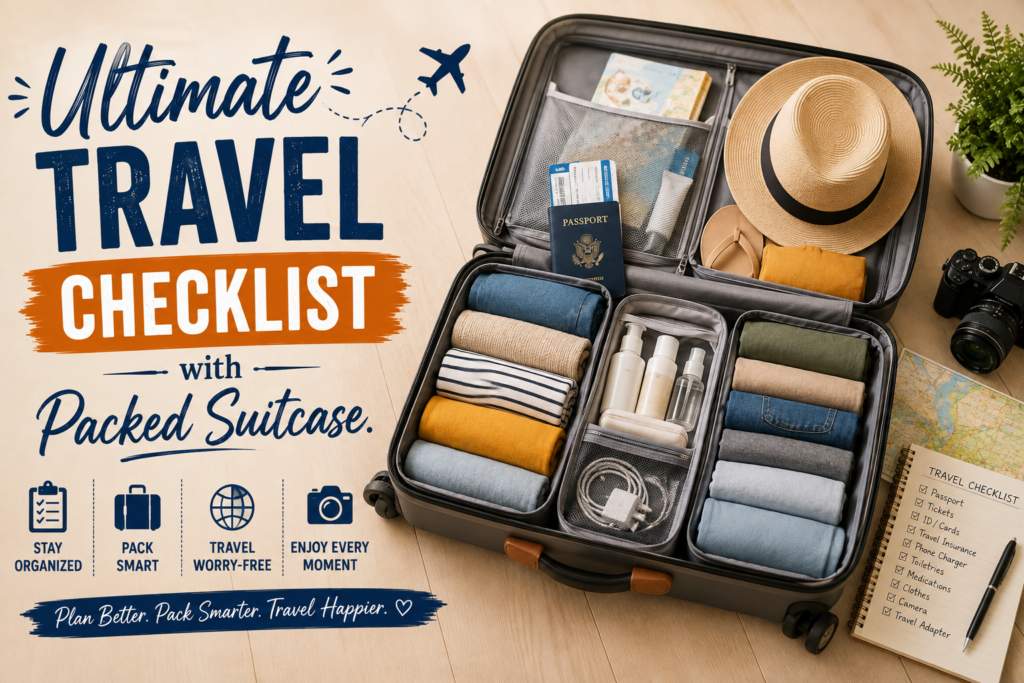
The Ultimate Travel Checklist: 50 Essentials
Never forget a travel essential again. Use this ultimate travel checklist with 50 must-have items for smooth, organised, and stress-free trips.
Table of Contents
- Why a travel checklist matters
- Travel documents and money
- Clothing and footwear
- Toiletries and personal care
- Electronics and accessories
- Health and safety essentials
- Comfort and travel extras
- Final packing tips
- Image placement suggestions
- Internal link suggestions
- FAQs
- Conclusion
Why a Travel Checklist Matters
A good travel checklist does more than help you pack. It reduces stress, prevents last-minute panic, and makes sure you do not buy items again at a higher price during the trip. Many travellers underestimate how many small things they need until they are already at the airport, train station, or hotel.
A checklist is especially helpful when:
- You are travelling with children or elderly family members.
- You are going abroad and need multiple documents.
- You are taking a long trip with different weather conditions.
- You want to pack light but still avoid missing essentials.
For example, forgetting a phone charger on a short domestic trip may be inconvenient. Forgetting it on an international trip can become a much bigger problem. Therefore, a checklist should be part of every travel routine.
Travel Documents and Money
These are the most important items because your trip can be delayed or disrupted without them. Always keep documents in a safe, easy-to-reach pouch.
Essential documents and money items
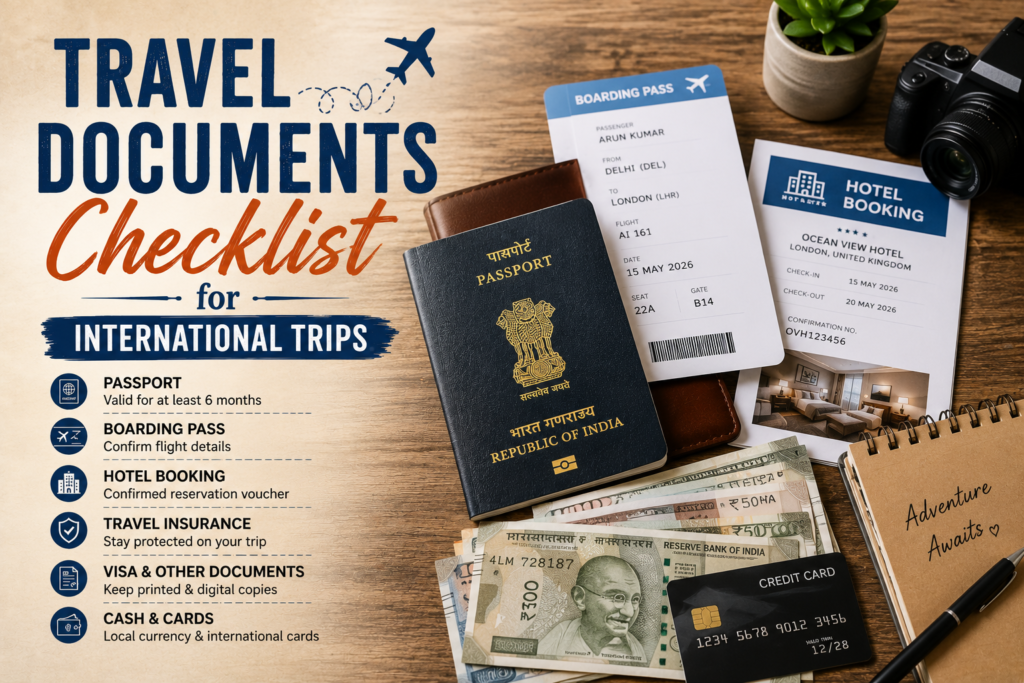
- Passport.
- Visa or e-visa approval.
- Flight, train, or bus tickets.
- Hotel booking confirmation.
- Government ID card.
- Travel insurance copy.
- Printed itinerary.
- Debit or credit cards.
- Local currency.
- Emergency cash.
It is also wise to keep digital copies of everything on your phone and email. For international travel, check passport validity, visa conditions, and return ticket requirements before departure. Meanwhile, for domestic travel, keep at least one valid photo ID with you at all times.
Clothing and Footwear
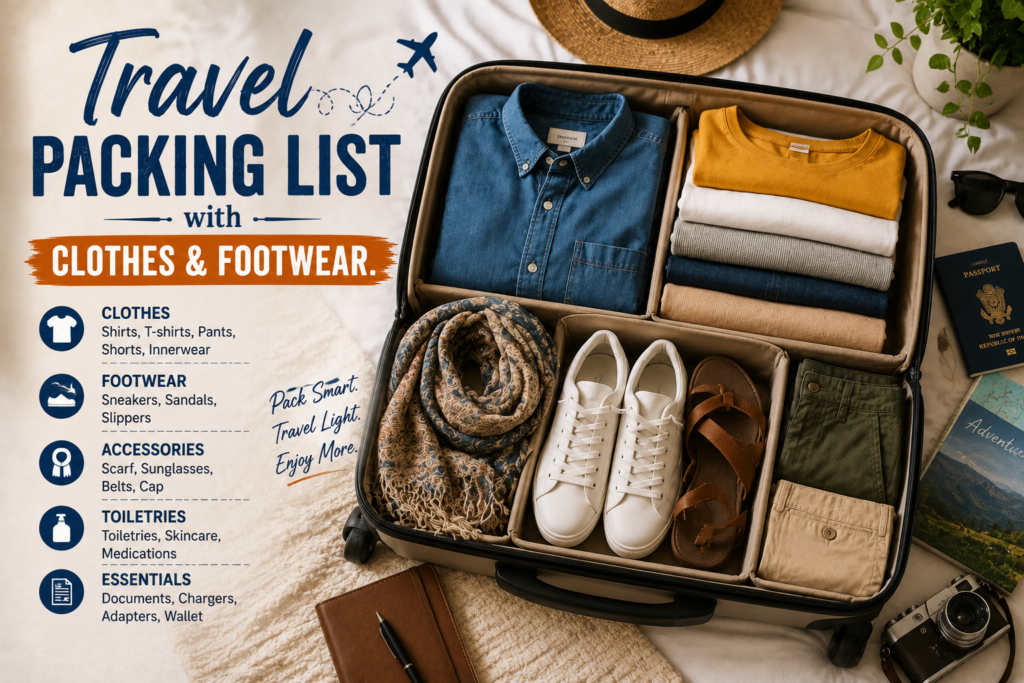
Clothing depends on the destination, weather, and length of stay. The goal is to pack clothes that are comfortable, versatile, and easy to mix and match.
Clothing essentials
- T-shirts or tops.
- Bottom wear such as jeans, trousers, or shorts.
- Innerwear.]]
- Sleepwear.
- Light jacket or sweater.
- Raincoat or umbrella.
- Scarf or shawl.
- Socks.
- Comfortable walking shoes.
- Sandals or slippers.
A practical tip is to pack outfits based on days and activities instead of packing “just in case” items. For example, if you are going to a beach destination, pack light clothes, quick-dry wear, and sandals. On the other hand, if you are travelling to a hill station, a jacket and closed shoes matter more than extra fashion items. Therefore, packing according to destination is more efficient than packing by habit.
Toiletries and Personal Care
Basic hygiene items are easy to forget but difficult to replace quickly in an unfamiliar place. Keeping a small toiletry kit ready for travel saves both time and money.
Toiletry essentials
- Toothbrush.
- Toothpaste.
- Face wash.
- Shampoo.
- Soap or body wash.
- Hairbrush or comb.
- Deodorant.
- Sunscreen.
- Moisturiser.
- Razor or grooming kit.
If you are flying, remember that liquid restrictions may apply in hand luggage. Put small travel-size bottles in a clear pouch for easier airport screening. Additionally, if you use specific skin or hair products, carry your own instead of relying on hotel supplies. This is especially useful for long trips.
Electronics and Accessories
Most modern trips depend heavily on electronics. Phones, chargers, and power backup items are not optional anymore. A dead phone battery can affect maps, tickets, hotel check-ins, and emergency communication.
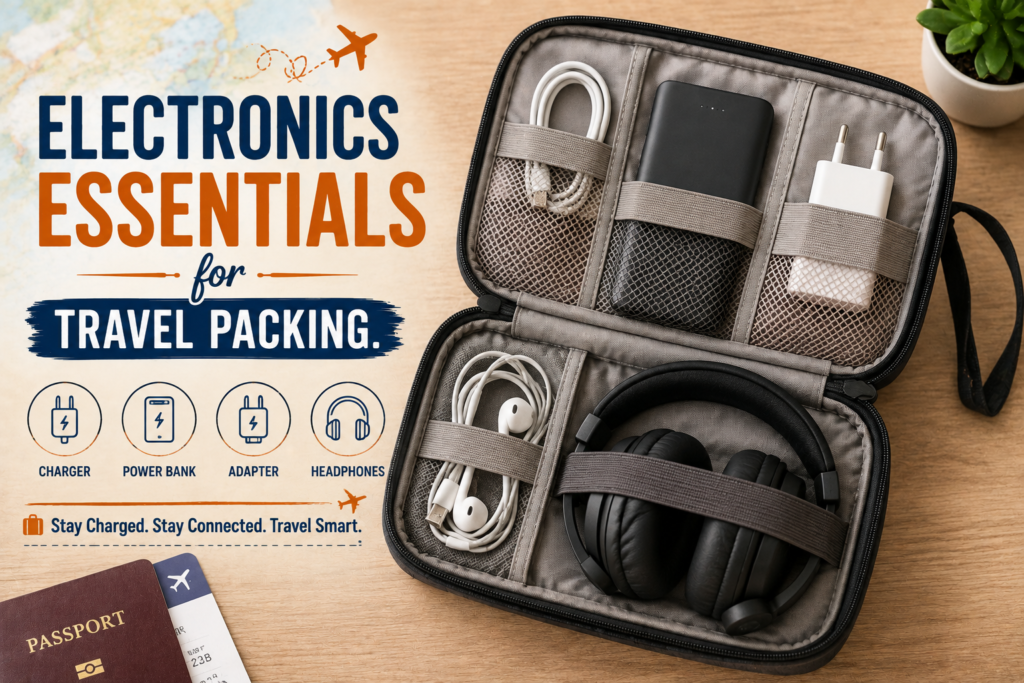
Caption: Keep chargers and cables organised for easy access.
Electronics essentials
- Mobile phone.
- Phone charger.
- Power bank.
- Earphones or headphones.
- Universal travel adapter.
- Laptop or tablet, if needed.
- Camera.
- Memory card or storage device.
- Charging cable pouch.
- SIM card or eSIM details.
If you are travelling internationally, a travel adapter is one of the most overlooked items. Different countries use different plug types, so a universal adapter is often worth carrying. Moreover, keep all charging cables together in one small organiser so they are easy to find in your bag.
Health and Safety Essentials
Health items are easy to ignore when packing, but they become very important if you feel unwell during the trip. Safety essentials also help in emergencies and unexpected delays.
Health and safety items
- Personal medicines.
- Prescription copy, if needed.
- Basic first aid kit.
- Hand sanitiser.
- Face masks, if required.
- Insect repellent.
- Water bottle.
- Tissue or wet wipes.
- Emergency contact list.
- Small flashlight.
If you have regular medication, always keep it in your carry-on instead of checked luggage. Similarly, a basic first aid kit with band-aids, pain relief, and motion sickness tablets can be useful on flights, road trips, or hill journeys. Consequently, you are better prepared for small travel issues before they become bigger problems.
Final Packing Tips
Packing is not only about what you take, but also how you organise it. A tidy bag makes the whole journey easier. Therefore, try to pack by category rather than throwing everything into the suitcase at once.
Simple packing habits that help:
- Use packing cubes or pouches.
- Keep documents separate from clothes.
- Put valuables in your hand luggage.
- Carry one small bag for daily essentials.
- Check weather and itinerary before final packing.
For example, if your trip includes sightseeing, one day bag with water, tissues, charger, and cash will be more useful than opening your suitcase repeatedly. Similarly, if you are travelling with family, assign different bags for documents, medicines, and snacks so everything is easier to access.
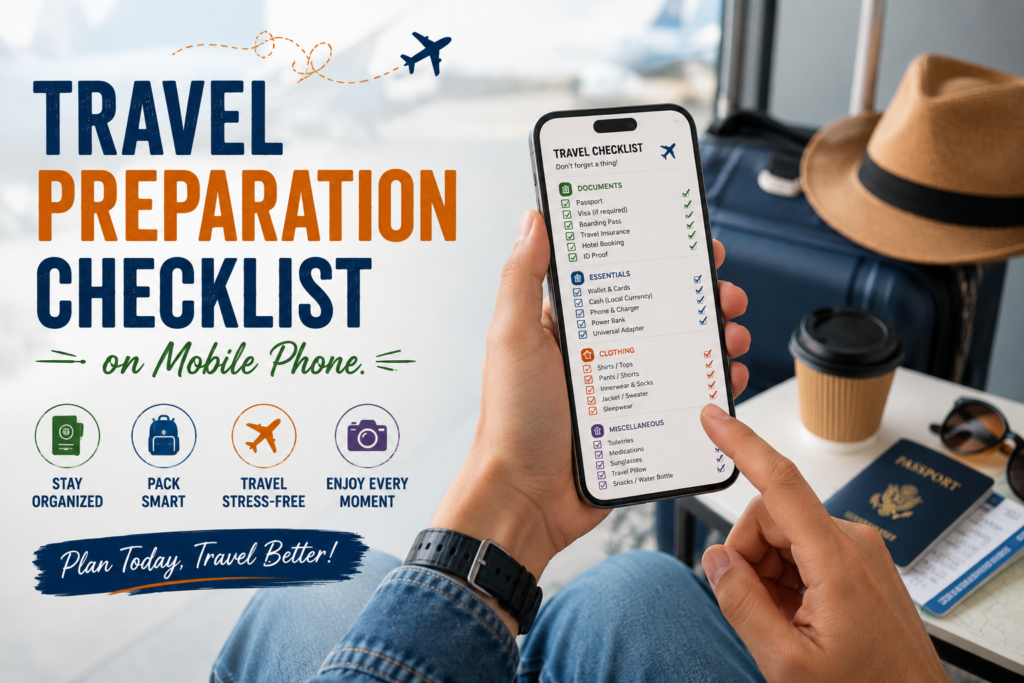
A final checklist helps avoid last-minute packing mistakes.
FAQs
1. What should be on every travel checklist?
Every travel checklist should include documents, money, clothes, toiletries, electronics, medicines, and comfort items. These are the basics that help you handle both planned and unexpected situations during a trip. In addition, it is smart to customise the list based on destination, weather, and trip length. A checklist is most effective when it is updated regularly instead of being reused without review.
2. How do I make a packing checklist for a trip?
Start with the most important categories: documents, clothing, toiletries, electronics, and health items. Then add destination-specific items such as swimwear, jackets, or travel adapters. It also helps to divide your list into hand luggage and checked luggage. This method keeps the packing process organised and reduces the chance of forgetting anything important.
3. What should I never forget when travelling internationally?
When travelling internationally, never forget your passport, visa if required, return ticket, hotel booking, foreign currency, and essential medicines. A travel adapter and phone charger are also very important. It is wise to keep digital and printed copies of your documents. International travel becomes much smoother when the paperwork is organised in advance.
4. How can I pack light but still be prepared?
Pack versatile clothing, choose multi-use items, and avoid carrying “just in case” things that you are unlikely to use. Use one pair of comfortable shoes, a small toiletry kit, and a limited number of accessories. Travel-size containers and packing cubes also help. Packing light is about smart choices, not leaving out essentials.
5. What are the most commonly forgotten travel items?
The most commonly forgotten items include chargers, adapters, medicines, toothpaste, sunglasses, and travel documents. Many travellers also forget power banks, socks, or a light jacket. These items may seem small, but they can affect comfort and convenience during the trip. A final checklist before leaving home helps prevent these mistakes.
6. Should I keep a physical or digital checklist?
Both are useful. A physical checklist works well during packing because you can tick off each item as you place it in the bag. A digital checklist on your phone is helpful for reuse on future trips. Many frequent travellers keep one master checklist and customise it for each journey. This saves time and improves consistency.
Conclusion
A strong travel checklist turns packing from a stressful task into a simple routine. When you know exactly what to carry, you save time, avoid panic, and reduce the risk of forgetting important items. Moreover, a good checklist helps you travel with more confidence whether the trip is domestic or international. From documents and clothes to electronics and health essentials, every item has a purpose.
The best approach is to keep one master checklist and update it based on your destination, weather, and travel style. That way, each new trip becomes easier to prepare for than the last. In the end, organised travel is not just about packing well. It is about starting your journey with peace of mind and arriving ready to enjoy it.
Call to Action
If you are planning your next holiday, Safar Set Go can help with customised travel planning, domestic tours, international tours, holiday packages, hotel bookings, flight bookings, honeymoon packages, family holidays, and visa assistance. Our travel support can make your trip simpler, smoother, and better organised from the very beginning.