
Solo Travel Made Simple: Beginner’s Guide 2026
New to solo travel? Learn how to plan, budget, stay safe, and enjoy your first solo trip with this complete beginner’s guide for 2026.
Table of Contents
- Why Solo Travel Is Worth Trying
- Overcoming the Fear of Traveling Alone
- Choosing Your First Solo Destination
- Budgeting for a Solo Trip
- Safety Tips for Solo Travellers
- Packing Smart for Solo Travel
- Making the Most of Your Solo Trip
- Frequently Asked Questions
- Final Thoughts
Why Solo Travel Is Worth Trying ?
Traveling alone for the first time can feel intimidating, but it is also one of the most rewarding experiences a person can have. There is no need to coordinate schedules, negotiate itineraries, or compromise on what you want to see and do. Every decision, from where to eat breakfast to how long to stay at a viewpoint, is entirely yours.
However, solo travel is not just about independence. It also builds confidence, sharpens problem-solving skills, and often leads to more genuine interactions with locals and fellow travellers, since solo travellers tend to be more approachable than large groups. Many first-timers discover that some of their most memorable travel moments come from unplanned conversations or spontaneous detours that would not have happened in a group setting.
This solo travel guide for beginners is designed for anyone considering their first trip alone, whether you are a student, a working professional, or someone simply looking for a change of pace. We will cover destination selection, budgeting, safety, packing, and practical tips to help you feel prepared rather than anxious about your first solo adventure.
Solo travel offers a level of freedom that group trips rarely provide.
Overcoming the Fear of Traveling Alone
Almost every solo traveller feels some hesitation before their first trip, and that is completely normal. The most common concerns include safety, loneliness, and simply not knowing how to navigate an unfamiliar place without support.
Here are a few ways to ease into solo travel:
- Start with a shorter trip, such as two or three days, before committing to longer journeys.
- Choose a destination with a well-established tourist infrastructure for your first trip.
- Stay in social accommodations like hostels or guesthouses where meeting other travellers is easier.
- Inform a friend or family member of your daily plans, especially during the first few days.
For example, a first-time solo traveller nervous about being alone in a new city might choose a hostel with a common area and organised local tours, which naturally creates opportunities to meet other travellers without needing to plan everything independently.
Moreover, most solo travellers report that any initial nervousness fades within the first day or two, as familiarity with the destination builds quickly once the trip is underway.
Choosing Your First Solo Destination
Your first solo destination should balance safety, ease of navigation, and enough activities to keep you engaged without feeling overwhelmed.
Good qualities to look for in a first solo destination include:
- Reliable public transport or walkable city centres
- A strong backpacker or solo traveller community
- English-friendly or easily navigable local language
- A good balance of activities and relaxation options
For instance, destinations like Rishikesh, Pondicherry, or Udaipur in India work well for beginners due to their manageable size, established tourist infrastructure, and welcoming atmosphere for solo visitors. Similarly, for international first-timers, destinations like Bali or Vietnam are often recommended due to their strong backpacker networks and affordable travel costs.
Therefore, rather than choosing the most adventurous or remote location for your first trip, pick somewhere that lets you build confidence gradually.
A walkable, welcoming destination makes the perfect starting point for solo travel.
Budgeting for a Solo Trip
Solo travel can actually be more expensive than group travel in some cases, since costs like accommodation and private transport are not split. However, with careful planning, it remains very manageable.
A simple solo travel budget structure includes:
- Accommodation: Hostels or budget hotels
- Transport: Local transport, occasional cabs
- Food: Street food and casual dining
- Activities: Entry fees, tours, experiences
- Buffer fund: 10 to 15 percent for unexpected costs
For example, a solo traveller planning a five-day trip to Rishikesh might budget ₹3,000 for hostel stays, ₹2,500 for local transport, ₹3,000 for food, ₹2,500 for activities like rafting or yoga sessions, and keep ₹1,000 as a buffer, totalling around ₹12,000 for the entire trip.
As a result, staying in hostels, using public transport, and eating at local eateries rather than tourist-focused restaurants can significantly reduce solo travel costs without compromising the experience.
Safety Tips for Solo Travellers
Safety is often the biggest concern for beginners, and while most solo trips go smoothly, a few precautions go a long way.
Practical safety tips include:
- Share your itinerary and accommodation details with someone you trust.
- Avoid displaying expensive gadgets or jewellery in unfamiliar areas.
- Research the neighbourhood before booking accommodation.
- Keep a copy of important documents both physically and digitally.
- Trust your instincts and leave any situation that feels uncomfortable.
For solo female travellers specifically, additional precautions such as choosing accommodations with good reviews from other women, avoiding isolated areas after dark, and dressing according to local customs can further enhance comfort and safety.
Furthermore, keeping local emergency numbers saved and knowing the location of the nearest hospital or embassy, in the case of international travel, adds an extra layer of preparedness.
A little preparation and awareness make solo travel significantly safer.
Packing Smart for Solo Travel
Since there is no one else to share the load, solo travellers benefit greatly from packing light and efficiently.
Essential packing categories include:
- Documents: ID proof, bookings, emergency contacts
- Clothing: Versatile, weather-appropriate outfits
- Electronics: Phone, charger, power bank
- Health kit: Basic medicines and sanitiser
- Security items: A money belt or anti-theft bag
For example, a solo traveller heading on a week-long trip could pack one backpack with mix-and-match clothing, a compact first aid kit, and a portable charger, avoiding the need for checked luggage entirely and making movement between locations far easier.
Similarly, packing a universal adapter and a portable lock for hostel lockers can prove extremely useful, particularly for international solo trips.
Making the Most of Your Solo Trip
Beyond logistics, solo travel is also about mindset. Being open to spontaneous plans, striking up conversations, and stepping slightly outside your comfort zone often leads to the most memorable parts of the trip.
Consider these approaches to enrich your solo experience:
- Join a local walking tour to meet other travellers on day one.
- Say yes to at least one activity you would not normally try.
- Journal your experiences, since solo trips often bring unexpected reflection.
- Allow flexibility in your schedule for unplanned discoveries.
For instance, a solo traveller who initially planned only to visit temples in a city might end up joining a local cooking class after meeting fellow travellers at a hostel, turning a simple sightseeing trip into a much richer cultural experience.
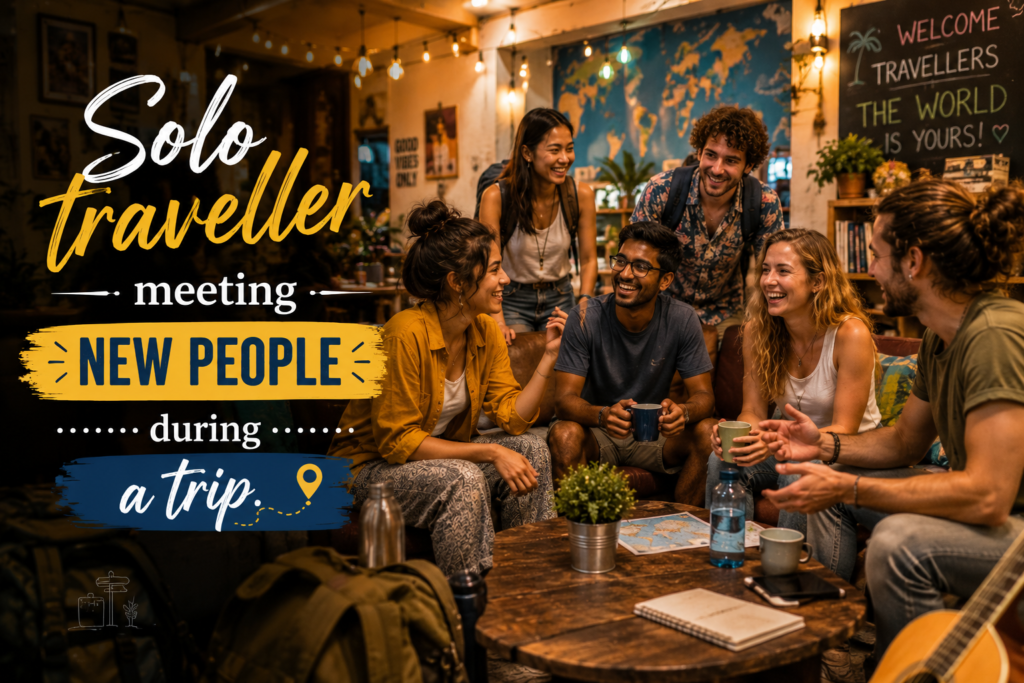
Some of the best solo travel memories come from unplanned connections.
Frequently Asked Questions
1. Is solo travel safe for beginners? Yes, solo travel is generally safe when approached with basic precautions such as researching your destination, staying in well-reviewed accommodations, and staying aware of your surroundings. Millions of people travel solo every year without significant issues.
2. What is the best destination for a first solo trip? Destinations with strong tourist infrastructure, walkable city centres, and an active backpacker community, such as Rishikesh, Pondicherry, or Bali, are ideal for beginners since they offer both safety and ease of navigation.
3. How much money do I need for a solo trip? This depends on the destination and travel style, but a moderate budget trip within India can often be managed in the range of ₹10,000 to ₹15,000 for a five-day trip, covering accommodation, food, transport, and activities.
4. How do I meet people while traveling alone? Staying in hostels, joining local walking tours, and using traveller community apps are some of the easiest ways to meet fellow travellers, particularly during the first few days of your trip.
5. What should solo female travellers keep in mind? Choosing accommodations with strong reviews from other women, avoiding isolated areas after dark, dressing according to local customs, and keeping emergency contacts easily accessible are all recommended precautions.
6. How do I deal with loneliness during solo travel? Loneliness is common in the initial days but often fades as you settle into the destination. Staying in social accommodations, joining group activities, and keeping a journal can help ease this transition.
7. Should I plan my entire itinerary in advance? It is helpful to plan major logistics like accommodation and transport in advance, but leaving some flexibility in your daily schedule allows room for spontaneous experiences, which are often a highlight of solo travel.
Final Thoughts
Solo travel does not need to feel intimidating once you understand how to plan, budget, and stay safe along the way. From choosing a beginner-friendly destination to packing light and staying open to new experiences, the steps in this guide are designed to help first-time solo travellers feel prepared rather than overwhelmed.
Ultimately, solo travel is as much about self-discovery as it is about seeing new places. With the right preparation, your first solo trip could become the starting point for a lifelong love of independent travel.
Start Your Solo Journey with Safar Set Go
If you are planning your first solo trip and want expert guidance along the way, Safar Set Go can help with customised itineraries, safe accommodation, recommendations, and complete travel itinerary.